



Inheriting a Home in New York: The Legal Steps You Should Not Skip

Inheriting a home is rarely as simple as “now it’s mine.” A handful of legal steps determine whether the process goes smoothly or becomes a years-long source of frustration.
For many families, the home is the largest single asset in an estate, and it is also the asset with the most emotional weight. Memories, family gatherings, holidays, and entire chapters of a family’s history are tied up in the property. When a parent or other loved one passes and a home transitions to the next generation, the legal and practical work that follows deserves the same care as the relationship itself.
At Klafehn, Heise & Johnson P.L.L.C., we help families across Monroe, Orleans, and Genesee Counties navigate these transitions every month. Here are the legal steps worth understanding so the process moves forward cleanly, and so the family avoids the surprises that catch people off guard later.
Step One: Confirm How Title Was Held
Before anything else, the family needs to know how the deceased person held title to the property. The deed itself answers this question, and the answer determines what happens next.
Sole Ownership
If the deceased person was the sole owner of the home, the property is part of the probate estate. It cannot legally be sold, refinanced, or transferred until the Surrogate’s Court has appointed an executor (if there was a will) or an administrator (if there was not), and the necessary process has been completed.
Joint Tenancy or Tenancy by the Entirety
If the property was held jointly with another person, most commonly a spouse, under a tenancy by the entirety, the surviving owner takes title automatically by operation of law, without needing to go through probate for the home itself. The death certificate is filed in the county where the property is located, and the title work is straightforward.
Trust-Held Property
If the home was held in a trust, the trust itself dictates what happens next. The trustee or successor trustee follows the terms of the trust to either retain the property, transfer it to a beneficiary, or sell it. This is often one of the smoothest paths because the trust avoids the probate process entirely.
The Probate Process for Real Estate
For property that is part of a probate estate, the executor cannot lawfully sign a deed transferring the property until the court has issued letters testamentary (or letters of administration). That step usually takes weeks or months depending on the court’s schedule and the complexity of the estate.
During that period, no buyer can close on a purchase and no formal transfer to an heir can be recorded. Knowing this in advance helps families plan around the timeline rather than discovering the constraint mid-transaction.
Tax Considerations: Federal and New York
Inheriting real estate carries tax considerations that are easy to overlook in the moment. Two of the most important:
Step-Up in Basis
Federal tax law provides a “step-up in basis” for inherited property, meaning the heir’s tax basis in the property is generally the fair market value as of the date of the original owner’s death, rather than what the original owner paid for it. For a home that has appreciated significantly over decades, the step-up can substantially reduce (or even eliminate) the capital gains tax owed if the heir later sells the property. Documenting the date-of-death value carefully (often through an appraisal) is worth the modest cost.
New York Estate Tax
New York has its own estate tax with its own threshold, separate from the federal estate tax. Larger estates may owe New York estate tax even when no federal estate tax is due. Understanding whether the estate is potentially taxable is one of the early steps a probate attorney walks through.
In the middle of an estate that includes real estate? Reach out to our office for guidance on the next step.
Mortgages, Insurance, and Carrying Costs Do Not Pause
While the legal process plays out, the property still needs to be maintained. Mortgage payments are still due. Homeowners insurance has to remain in force, and many policies have specific requirements when a property becomes vacant or the named insured passes away. Property taxes and any HOA fees continue to accrue. Utilities have to be kept on, at least at minimum levels, to prevent damage.
One of the first practical tasks for an executor or family member is to make sure these obligations are being handled, and that the insurance carrier has been notified of the change in circumstances. A coverage gap discovered after a winter pipe burst is a much harder situation than one prevented up front.
Decisions: Keep, Sell, or Rent
Once the legal authority to act on the property is in place, the family faces the bigger question of what to do with the home. The options are usually some combination of keeping the property within the family, selling it, or renting it out.
Each option has its own implications. Keeping the home requires deciding who will own it, how shared ownership will be governed if multiple heirs are involved, and how ongoing costs will be split. Selling is often the cleanest option but requires the property to be prepared for market and the proceeds to be distributed under the terms of the estate. Renting introduces its own legal and tax considerations and is rarely the right choice unless one of the heirs is willing to take on the management work.
None of these decisions has to be made immediately. In fact, taking some time before deciding often produces a better outcome than rushing the choice.
When Multiple Heirs Are Involved
The most common source of difficulty in inherited real estate is shared ownership among heirs who do not agree on what to do with the property. One sibling wants to keep it; another wants to sell. One wants to rent it out; another does not want the management headache. One has the financial means to buy out the others; another does not.
These situations are far easier to resolve when there is a clear framework for the conversation, and when an attorney is involved early to help structure any buyout, partition, or sale that the family agrees on. Without that structure, disagreements about an inherited home have a way of damaging family relationships in ways that long outlast the property itself.
How We Can Help
Our attorneys help families across Brockport, Holley, Hilton, Spencerport, Albion, Batavia, Rochester, and the surrounding communities navigate the legal side of inheriting real estate, from the initial probate/administration work to the eventual transfer or sale of the property. We approach these situations with the patience they deserve and the practical guidance families need.
Call us at 585-637-3911 or send us a message online to schedule a conversation.
Legal Disclaimer: This article provides general information about inherited real estate and probate under New York State law. It is not legal or tax advice and should not be relied upon as such. Individual circumstances vary, and decisions should be made with the guidance of an attorney familiar with your specific situation. For guidance tailored to your family’s circumstances, please consult with the attorneys at Klafehn, Heise & Johnson P.L.L.C. Portions of this content are considered ATTORNEY ADVERTISING under the New York State Unified Court System Rules of Professional Conduct (22 NYCRR Part 1200). Prior results do not guarantee a similar outcome.
‹ Back
Recent Posts
-

Medicaid Asset Protection Trusts in New York: How They Work
September 23, 2026
-
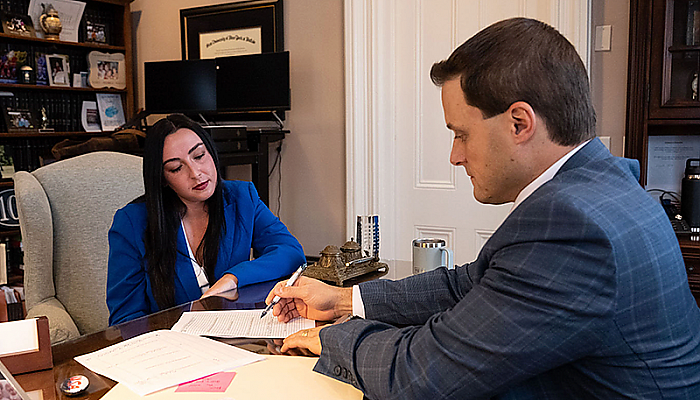
What to Expect at Your First Visit With Our Firm
September 16, 2026
-

-

Beneficiary Designations vs. Your Will: Why the Two Must Work Together
September 2, 2026
-


Hours of Availablity
Recent on the Blog

Medicaid Asset Protection Trusts in New York: How They Work
A Medicaid Asset Protection Trust can shield a home and savings from long-term care costs. Here is how a MAPT works in New York, and what you keep and give up.
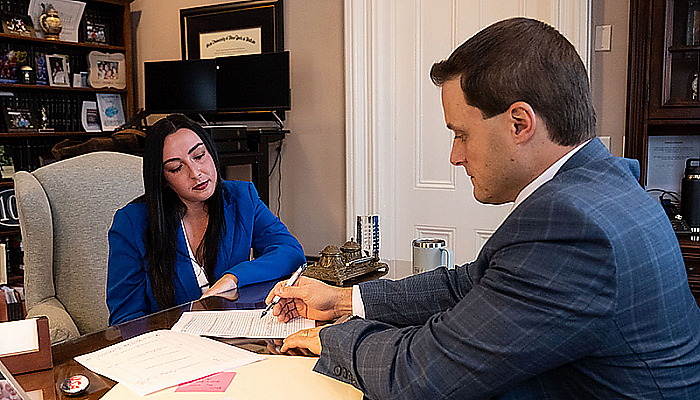
What to Expect at Your First Visit With Our Firm
Meeting a lawyer for the first time can feel intimidating. Here is what to expect at your first visit with our firm, what to bring, and how to make it productive.

Selling a Home in New York: A Seller's Legal Checklist From Listing to Closing
Selling a home in New York involves real legal responsibilities. Here is a seller's checklist from clearing title and disclosures through contract and closing.
Website by 
 Get Help Today!