

Health Care Proxies, Living Wills, and MOLST Forms: Making Your Medical Wishes Known in New York

Every adult will eventually face a medical decision they cannot make for themselves. The only question is whether someone will be ready to speak for you, and whether anyone will know what you would have wanted.
Most people think of estate planning as deciding who receives what after death. Just as important, and far more likely to matter sooner, is the set of documents that governs medical care while you are alive but unable to communicate. In New York, that means a health care proxy, often a living will, and for those who are seriously ill, a MOLST form. The three are related but do different jobs, and confusing them is one of the more common problems we see.
At Klafehn, Heise & Johnson P.L.L.C., we prepare the health care proxy and living will documents for families across Monroe, Orleans, and Genesee Counties. The creation and execution of a MOLST form must be done by a medical professional. Here is what each one does and how they fit together.
The Health Care Proxy: Naming Your Decision Maker
A New York health care proxy is a short document with enormous consequences. In it, you appoint an agent, one person, to make health care decisions on your behalf if a physician determines you lack the capacity to make them yourself. Any competent adult may sign one and it requires two witnesses.
Two features of the proxy are worth understanding. First, it only takes effect upon a determination that you cannot make your own decisions. As long as you can speak for yourself, you do. Second, your agent’s authority is broad. Once it is in effect, your agent generally steps into your shoes and can consent to or refuse treatment, choose among care options, and access your medical records.
Without a proxy, New York’s Family Health Care Decisions Act provides a statutory order of surrogates who may decide for a hospitalized patient. That is a reasonable backstop, but it hands the decision to whoever the statute ranks first rather than to whoever you would have chosen, and it can put family members in the painful position of guessing at your wishes while disagreeing with each other.
The Artificial Nutrition and Hydration Provision
This detail is specific to New York and is regularly missed on forms downloaded from the internet. Your health care agent cannot make decisions about artificial nutrition and hydration, meaning feeding tubes and IV fluids, unless the proxy shows that your agent reasonably knows your wishes on that subject. If the document is silent, your agent may be unable to act on the very question families most often face.
A properly drafted proxy addresses this directly. It is a single sentence that can spare your family an agonizing and legally complicated situation.
The Living Will: Saying What You Want
A health care proxy names who decides. A living will describes what you want. It sets out your preferences about life-sustaining treatment in situations such as terminal illness, permanent unconsciousness, or advanced irreversible decline.
New York does not have a living will statute the way some states do. Instead, New York courts have long recognized that clear and convincing evidence of a person’s own wishes controls, and a carefully written living will is among the strongest forms of that evidence. In practice, a proxy and a living will work as a pair: your agent has the authority to act, and your living will gives that agent both direction and cover, so a difficult decision feels like following your instructions rather than deciding your fate.
No health care proxy in place? Reach out to our office, because this is among the simplest documents to sign and one of the worst to be without.
The MOLST Form: A Medical Order, Not a Planning Document
MOLST stands for Medical Orders for Life-Sustaining Treatment. Unlike a proxy or living will, a MOLST is an actual physician’s order, signed by a doctor, PA or NP, recorded on a distinctive bright pink form, and honored by emergency responders and across care settings.
A MOLST is not for everyone. It is intended for people who are seriously ill or frail, generally those who might reasonably die within the year or who are moving into a nursing home. It records specific decisions: whether to attempt resuscitation, whether to use a ventilator, whether to transfer to a hospital, whether to use a feeding tube. A healthy fifty-year-old does not need a MOLST. A parent entering a skilled nursing facility very likely should discuss one with their physician.
Because a MOLST is a medical order, it is completed with a doctor rather than at a law office. The conversation is much easier, though, when the proxy and living will already exist and the family already knows what the patient wants.
Choosing the Right Agent
This choice matters more than the paperwork. The best health care agent is not necessarily your oldest child or your closest relative. It is the person who can be reached quickly, who can stay composed in a hospital corridor, who will ask physicians hard questions, and above all who will carry out your wishes rather than substitute their own.
Think honestly about whether the person you are considering could withdraw treatment if that is what you would want. Someone who loves you deeply but could never bring themselves to say no may not be the right choice. Always name at least one alternate, since agents travel, fall ill, and occasionally are in the same car accident.
And then do the most important thing: tell them. An agent who learns of the appointment during a crisis is at a serious disadvantage. A twenty-minute conversation while everyone is healthy is worth more than the document itself.
How These Fit With a Power of Attorney
These documents cover medical decisions only. Your money is a separate matter. A durable general power of attorney lets a trusted person handle financial affairs: paying bills, managing accounts, dealing with insurance, handling real estate. A health care proxy gives no authority over finances, and a power of attorney gives none over medical care. A complete plan includes both, and for many families the two roles go to different people who each suit the work.
Where to Keep Them, and Common Mistakes
A document nobody can find is a document that does not exist. Keep the originals somewhere accessible, not in a safe deposit box that will be closed on a Sunday night. Give copies to your agent and alternate, your primary care physician, and any hospital or facility where you receive regular care.
The mistakes we see most often are these: signing a generic form that omits the nutrition and hydration language, naming an agent and never telling them, letting the documents grow decades out of date after a divorce or a death, keeping the only copy in a place no one can reach, and assuming a spouse automatically has full authority in every setting. Each is easy to avoid and costly to discover in an emergency.
How We Can Help
Our attorneys help individuals and families across Brockport, Holley, Hilton, Spencerport, Albion, Batavia, Rochester, and the surrounding communities put advance directives in place that are valid in New York, actually address the decisions families face, and fit the rest of the estate plan. These documents are quick to prepare and bring real peace of mind.
Call us at 585-637-3911 or send us a message online to get your directives in place.
Legal Disclaimer: This article provides general information about health care proxies, living wills, and MOLST forms under New York State law. It is not legal or medical advice and should not be relied upon as such. Individual circumstances vary, and decisions should be made with the guidance of an attorney familiar with your specific situation and, where appropriate, your physician. For guidance tailored to your needs, please consult with the attorneys at Klafehn, Heise & Johnson P.L.L.C. Portions of this content are considered ATTORNEY ADVERTISING under the New York State Unified Court System Rules of Professional Conduct (22 NYCRR Part 1200). Prior results do not guarantee a similar outcome.
‹ Back
Recent Posts
-
-

Adding a Child to Your Deed in New York: Why It Often Backfires
October 1, 2026
-

-

Medicaid Asset Protection Trusts in New York: How They Work
September 23, 2026
-
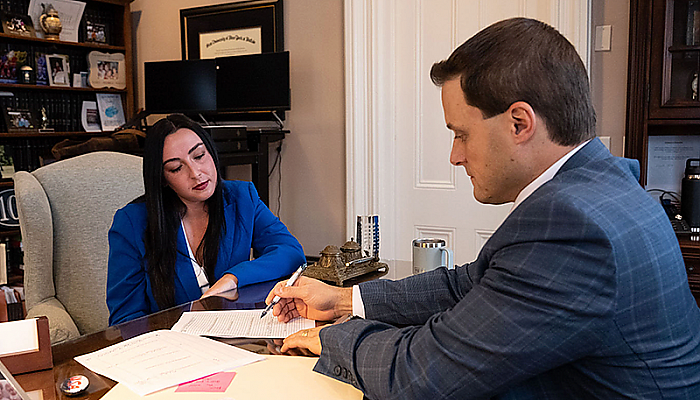
What to Expect at Your First Visit With Our Firm
September 16, 2026
Hours of Availablity
Recent on the Blog

Health Care Proxies, Living Wills, and MOLST Forms: Making Your Medical Wishes Known in New York
A health care proxy names who decides, a living will says what you want, and a MOLST is a doctor's order. Here is how New York's advance directives work together.

Adding a Child to Your Deed in New York: Why It Often Backfires
Adding a child to your deed seems simple, but it can trigger Medicaid penalties, capital gains tax, and creditor exposure. Here is what it really does in New York.

Business Succession Planning: Passing the Family Business to the Next Generation
Without a succession plan, a lifetime of work can unravel. Here is what thoughtful business succession planning involves for New York family businesses.
Website by 
 Get Help Today!