

What Happens If You Die Without a Will in New York?

Many people assume that if they die without a will in New York, their assets will simply go to the people they would have chosen anyway. The actual rules are less intuitive than most families expect.
Estate planning attorneys hear the same comment regularly: “If something happens to me, my spouse will get everything, right?” In some situations, that is more or less true. In many others, it is not. New York has a detailed statutory framework that takes over when someone dies without a valid will, and the results often surprise the families who go through it for the first time.
At Klafehn, Heise & Johnson P.L.L.C., we walk families across Monroe, Orleans, and Genesee Counties through both planned estates and unplanned ones. Here is what really happens in New York when there is no will, and why putting one in place is one of the highest-leverage decisions an adult can make.
What “Intestate” Means in Practice
Dying without a valid will is referred to as dying “intestate.” In that situation, the New York Estates, Powers and Trusts Law steps in and dictates how the deceased person’s assets are distributed. The court appoints an administrator (usually a close family member) to handle the estate, and the assets pass according to a fixed statutory formula. Not according to the deceased person’s wishes, conversations, or anything they may have told anyone in their lifetime.
The administrator does not have the flexibility and direction that a named executor would have under a will. The distribution is dictated by statute, and the administrator’s job is to follow it.
How New York Distributes Assets Without a Will
The exact distribution depends on which family members survive. A few common scenarios:
Surviving Spouse and Children
If the deceased person leaves a surviving spouse and children together (whether biological or legally adopted), the spouse receives the first $50,000 of the estate plus half of the remainder. The other half is divided among the children. This often surprises surviving spouses who assumed they would inherit everything, and it can create complicated situations when minor children are involved, since their share has to be held in a guardianship (or by a custodian) until they reach adulthood.
Surviving Spouse, No Children
If the deceased person leaves a spouse but no descendants, the spouse inherits the entire estate. This is the scenario closest to what most people assume happens by default, but it only applies when there are no children at all.
Children, No Surviving Spouse
If there is no surviving spouse, the estate passes equally to the deceased person’s children. If a child has predeceased the parent but left children of their own, those grandchildren inherit their parent’s share.
Far-Reaching Default Rules
If there is no spouse, no children, and no descendants, the statute keeps moving outward, to parents, then to siblings, then to nieces and nephews, then to grandparents, then to aunts and uncles, then to first cousins, and so on. In rare cases where no qualifying relatives can be found, the estate ultimately passes to the State of New York.
None of these distributions account for personal relationships, friendships, charitable intentions, or anything beyond bloodline and marriage. A close lifelong friend, a longtime caregiver, or a charity the deceased deeply supported receives nothing under intestate succession unless they happened to be named on a beneficiary designation outside the will.
What the State Cannot Do for You
The intestacy statute is a default rule, not an estate plan. It cannot make any of the choices a thoughtful estate plan would make:
- It cannot name a guardian for minor children;
- It cannot create a trust to manage a child’s inheritance until they are mature enough to handle it;
- It cannot disinherit an estranged family member;
- It cannot leave anything to a stepchild who was never legally adopted;
- It cannot include charitable gifts;
- It cannot account for blended family dynamics;
- It cannot direct that specific items go to specific people; and
- It cannot reduce the burden, expense, and delay of the estate process.
Each of these is something a basic will can do in a single afternoon’s work. None of them happens by default.
Without a will in place? Reach out to our office, even a basic will is dramatically better than the default rules.
Probate Without a Will Is Slower and More Public
When a person dies with a valid will, the named executor petitions the Surrogate’s Court to admit the will to probate, and the process moves forward according to the will’s instructions. When a person dies without a will, the process is similar in structure but more cumbersome and without the decedent's specific direction, the court has to determine who the rightful heirs are, formally appoint an administrator, and oversee distribution according to the statutory formula.
That additional process may mean more delay, more legal cost, and more publicly accessible filings. For families already navigating grief, the administrative burden of an intestate estate adds friction that a thoughtful estate plan would have avoided.
Special Situations Where Intestate Rules Hurt the Most
Some family situations are particularly poorly served by the default rules:
- Blended families, stepchildren do not inherit and biological children of a former marriage may share with a current spouse in unexpected ways;
- Unmarried partners, long-term partners who never married have no inheritance rights at all under intestacy;
- Estranged family, the statute does not care about the quality of the relationship, only the legal connection;
- Special-needs beneficiaries, an inheritance can disrupt eligibility for needs-based government benefits unless properly structured through a trust; and
- Business owners, ownership interests in a business can pass to heirs who have no role in or knowledge of the company.
For families in any of these situations, the gap between what the statute does and what a thoughtful plan would do is especially wide.
How to Avoid the Whole Problem
A basic will is one of the most cost-effective and impactful pieces of legal work most adults will ever do. For families with more complex situations, a will is often paired with one or more trusts, updated beneficiary designations, a power of attorney, and a health care proxy, the full toolkit of documents that, taken together, replace the default rules with the family’s actual choices.
Our attorneys help individuals and families across Brockport, Holley, Hilton, Spencerport, Albion, Batavia, Rochester, and the surrounding communities put these documents in place. The conversation is usually shorter and the cost is usually lower than people expect, and the peace of mind that comes from knowing the default rules no longer apply to your family is immediate.
Call us at 585-637-3911 or send us a message online to set up a time to talk.
Legal Disclaimer: This article provides general information about intestate succession and estate planning under New York State law. It is not legal advice and should not be relied upon as such. Individual circumstances vary, and decisions should be made with the guidance of an attorney familiar with your specific situation. For guidance tailored to your family, please consult with the attorneys at Klafehn, Heise & Johnson P.L.L.C. Portions of this content are considered ATTORNEY ADVERTISING under the New York State Unified Court System Rules of Professional Conduct (22 NYCRR Part 1200). Prior results do not guarantee a similar outcome.
‹ Back
Recent Posts
-

Medicaid Asset Protection Trusts in New York: How They Work
September 23, 2026
-
What to Expect at Your First Visit With Our Firm
September 16, 2026
-

-

Beneficiary Designations vs. Your Will: Why the Two Must Work Together
September 2, 2026
-

Hours of Availablity
Recent on the Blog

Medicaid Asset Protection Trusts in New York: How They Work
A Medicaid Asset Protection Trust can shield a home and savings from long-term care costs. Here is how a MAPT works in New York, and what you keep and give up.
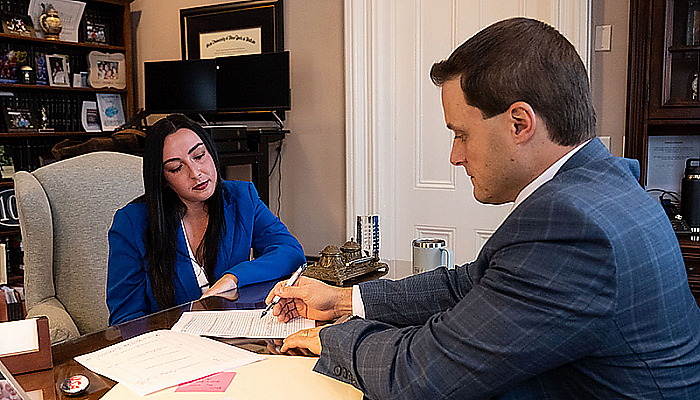
What to Expect at Your First Visit With Our Firm
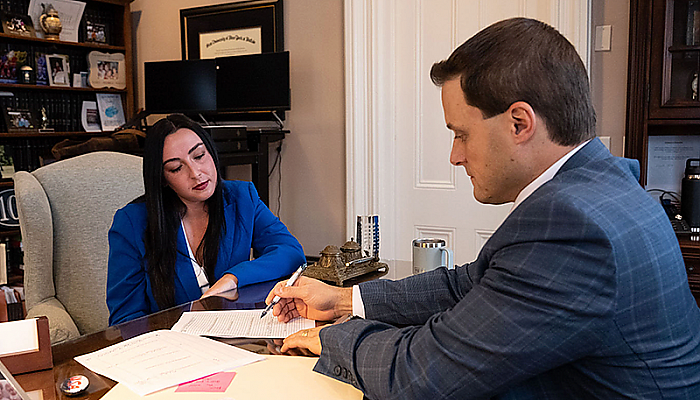
Meeting a lawyer for the first time can feel intimidating. Here is what to expect at your first visit with our firm, what to bring, and how to make it productive.

Selling a Home in New York: A Seller's Legal Checklist From Listing to Closing
Selling a home in New York involves real legal responsibilities. Here is a seller's checklist from clearing title and disclosures through contract and closing.
Website by 
 Get Help Today!